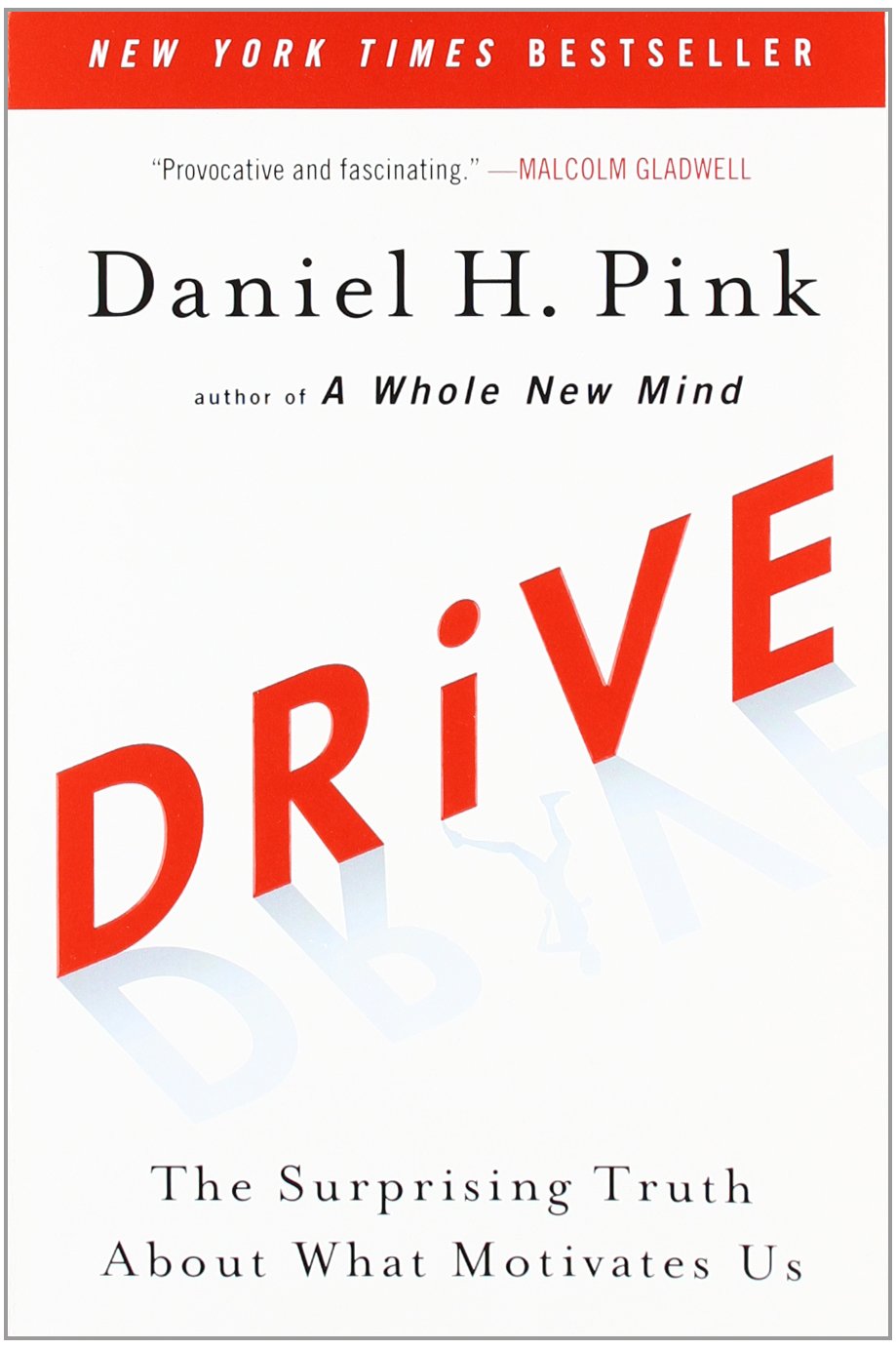
This book is specific to motivation, what motivates us, and how to motivate others. I often troll the Barnes and Nobles or look at the suggestions on Amazon for my next read and this one was a great suggestion by one of the resources.
I have already discovered my next two reads which will be: Happier by Tal Ben-Shahar, Ph D. as the author’s study at Harvard was referenced in the Happiness Advantage, and Flow: The Psychology of Optimal Experience as Mihaly Csikszentmihalyi was referenced in Happiness Advantage and DRiVE.
This topic of motivation intrigues me as an individual, a manager, and a parent. I have learned that we are all motivated differently. I was brought up on the carrots and sticks mentality and since I have worked in sales for the last 20 years this is how we are most often being driven. However, this isn’t how I am motivated and I have learned that my daughter isn’t motivated in this manner either. This book sheds light on 7 reasons this method often doesn’t work. I think I have finally come to the realization that this is correct. But, if I can’t drive a person with a “BIG” bonus, then how can I drive them?
Daniel H. Pink classifies the old ideas of what motivates us as Motivation 2.0 and the new ideas as Motivation 3.0. Motivation 2.0 depended on Type X behavior which motivates us by extrinsic desires or external rewards while Motivation 3.0 concentrates on Type I behavior or intrinsic desires like the inherent satisfaction of the activity itself. What he discovered in his research is that Type Is always outperform Type Xs over time.
He breaks motivation into 3 main elements: Autonomy, Mastery, and Purpose. Autonomy is about creating an environment for your people to their best work and creating a culture that is results oriented. This gives people the ability to complete their duties as they like and manages to the results. The four essentials are what people do, when they do it, how they do it, and who they do it with or the four Ts which is their task, their time, their technique, and their team. Mastery speaks to our innate need to evolve. Daniel mentions the difference between compliance and engagement meaning if we are motivated we will not need to be told to learn we will seek it out. He speaks to Mihaly Csikszentmihalyi’s idea of flow which I have always referred to as being in the zone. There are 3 laws of Mastery and the first is that Mastery is a Mindset. I believe in the incremental theory that although we may start with a certain amount of intelligence with effort we can increase. Mastery is a Pain. This takes it a step further and explains that nothing is easy but with grit and determination mastery can be achieved. I enjoyed the Dr. J quote he used. “Being a professional is doing the things we love to do, on the days you don’t feel like doing them.” In the end, Mastery can be attained through deliberate practice. The third and final is that Mastery is an Asymptote and you have to love math to know this idea. It is that you can approach mastery, you can home in on it, you can get really, really close to it but you can never touch it. This can be a source of frustration and as Daniel H. Pink writes the joy is in the pursuit more than the realization. The most important is my opinion is Purpose. In an organization, you may refer to this as a shared vision. You can achieve good things through Autonomy and Mastery, but it is Purpose that cause people to hitch their desires to a cause greater than themselves. Daniel writes about the purpose motive and the first three realms of organizational life that are submerging which are goals, words, and policies. Daniel has a toolkit at the end of the book and the exercise I like the most is around purpose and he asks you to answer to questions on the back of an index card. The first is “What gets you out of bed in the morning?” and the second is “What keeps you up at night?”
In summary, science shows that the secret to high performance isn’t our biological drive or our reward-and-punishment drive, but our third drive-our deep seated desire to direct our own lives, to extend and expand our abilities, and to make a contribution.
Speak Your Mind